Matanuska-Susitna Borough Salmon Research
The Matanuska-Susitna Borough (Borough) required consulting assistance to address information needs identified in the Borough’s Matanuska-Susitna Salmon Research, Monitoring, and Evaluation (RM&E) Plan for Upper Cook Inlet. Kleinschmidt | R2 staff has previously collaborated with the Borough to develop this RM&E plan to prioritize funding for projects to manage, protect and improve Borough salmon stocks.
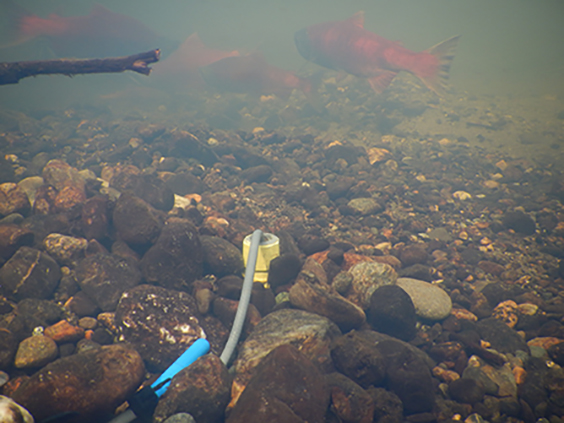
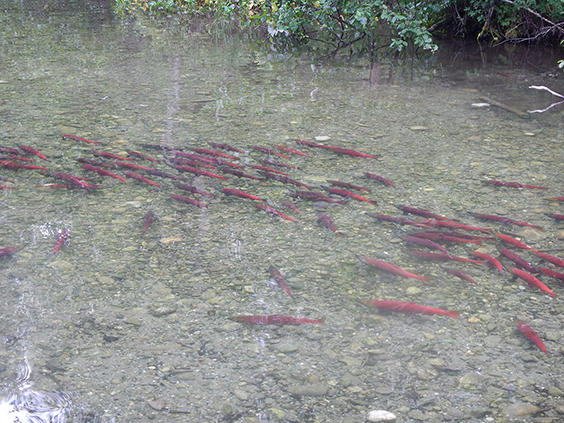
Kleinschmidt conducted a study to characterize the water quality of salmon spawning habitat, specifically egg incubation temperature within redds. The study focused on streams that had previously been identified as sensitive to increases in air temperature and compared those with streams thought to be buffered from air temperature effects. Our team collected ambient air, surface water, and intergravel temperature data across six study sites within the East Susitna River and Big Lake Drainages. Intergravel temperatures were collected using custom-built thermistor strings installed within recent redd excavations and remotely connected data loggers. Results from this study indicated spawning timing is critical in acquiring the thermal units necessary for timely embryo development. As the climate warms, the window of suitable incubation temperatures for egg incubation in Borough streams will become constrained. Streams with higher temperature sensitivity will be impacted the greatest. Our data provided insight into the correlation between air and water temperature and the impact of groundwater discharge.
The results of the Kleinschmidt | R2 study provided the Borough with valuable awareness of the potential climate change temperature affects to manifest is changes in salmon spawning and incubation temperatures. This information will be useful for informing management practices and can help to optimize resource benefits while maintaining biological productivity. Specially, the research provides the Borough with a better understanding of where they may focus their funding to improve temperature related outcomes from their habitat enhancement projects.